
Not long ago, small independent projects were seen as little more than an alternative to big-budget releases. Today, indie games regularly appear on “best games” lists, build loyal fan communities, and some even sell millions of copies.
Players are no longer impressed by high-end graphics, massive open worlds, or expensive marketing campaigns alone. More gamers are looking for fresh ideas, memorable stories, and gameplay that offers something different. This is exactly where independent developers stand out.
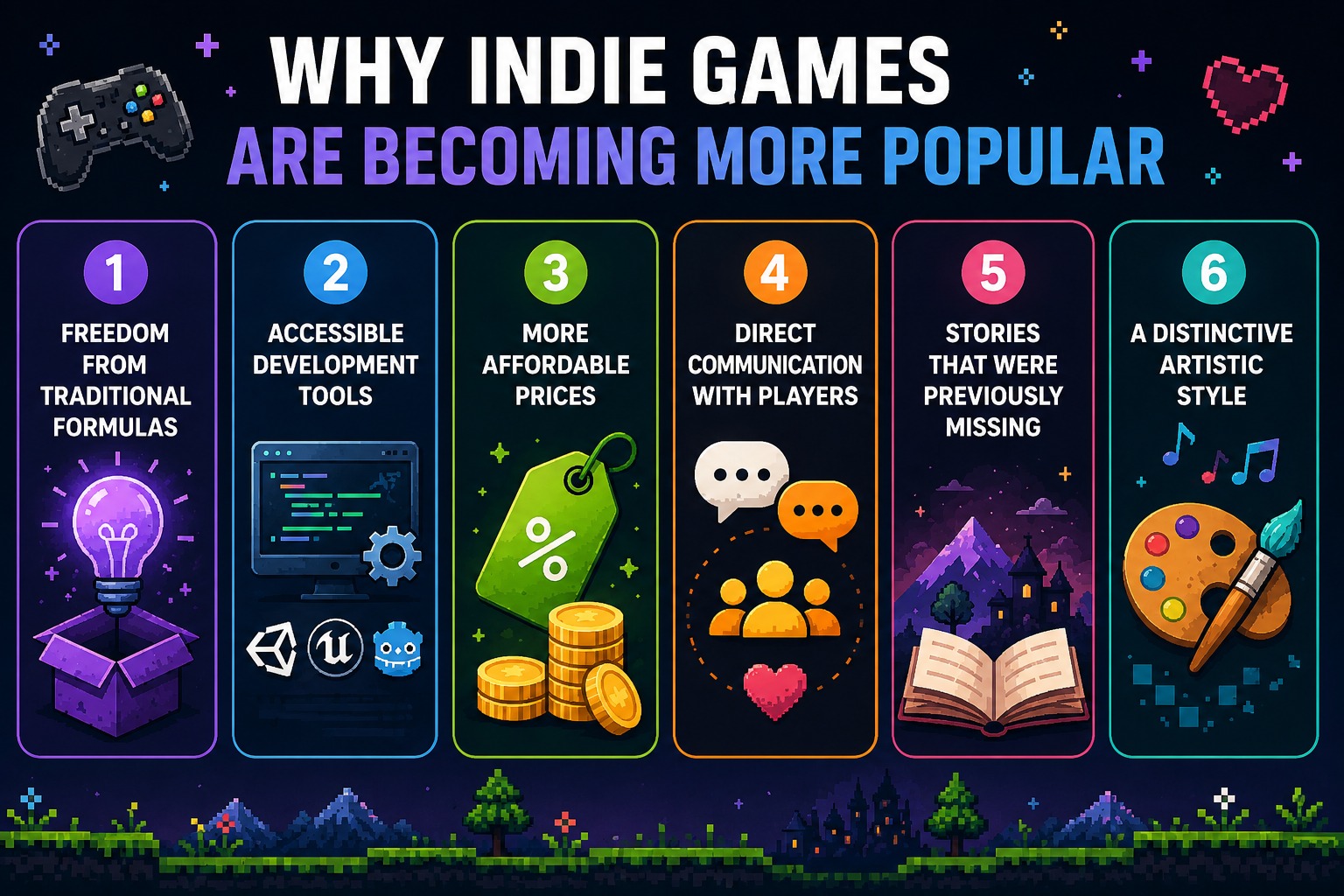
Freedom to break the rules
Developing a AAA game requires enormous financial investment, so large studios are often reluctant to take creative risks. A failed experiment can cost millions, which is why many major releases rely on familiar genres, mechanics, and storytelling formulas.
Independent teams have far more creative freedom. They can combine unexpected genres, move away from realistic visuals, or build an entire game around one original gameplay idea.
That is how games like Stardew Valley, Hades, and Undertale became modern classics. Each introduced ideas that would have been difficult to pitch in a traditional corporate studio. Players remember these titles not because of their budgets, but because they offer something unique.
Easier game development
The indie scene continues to grow because game development has become much more accessible. Engines such as Unity, Unreal Engine, and Godot provide ready-made tools for graphics, animation, physics, and programming.
Developers no longer have to build every technology from scratch. In many cases, a single creator or a small remote team can produce a polished commercial game.
Digital storefronts have also transformed the market. Steam, itch.io, the Epic Games Store, and console marketplaces allow independent studios to reach players worldwide without relying on a traditional publisher.
Competition remains intense, but bringing a game from concept to release is now far more achievable than it was a decade ago.
Affordable pricing
Most indie games cost significantly less than AAA releases, making them attractive to students, casual gamers, and players on a budget.
Many indie titles also have modest hardware requirements. They can run on standard laptops, handheld devices, and older PCs, allowing more people to enjoy them without investing in expensive gaming equipment.
A lower price does not mean less value. Many indie games offer dozens of hours of gameplay, deep mechanics, and excellent replayability.
Close connection with players
Independent developers often communicate directly with their audiences. They publish development updates, interact with fans on Discord and social media, and invite players to participate in testing.
This constant feedback helps improve balance, fix problems, and introduce features the community actually wants.
As a result, players feel involved in the game’s evolution. They follow updates, discuss theories, create mods, and recommend the game to others. For many indie studios, this loyal community is far more valuable than a massive advertising budget.
Stories that stand out
Indie developers frequently explore topics that large publishers consider too niche or commercially risky. Their games tackle subjects such as anxiety, loneliness, identity, personal growth, and family relationships.
In Celeste, challenging platforming is closely connected to the protagonist’s struggle with self-doubt. Hollow Knight tells much of its story through atmosphere, environmental details, and exploration rather than lengthy dialogue.
These games are not designed to appeal to everyone. Instead, they create stronger emotional connections with players who relate to their themes.
A distinct creative identity
Limited budgets encourage developers to focus on artistic expression instead of visual realism. Pixel art, hand-drawn environments, stylized animation, and minimalist design have become defining features of many successful indie games.
Music also plays a central role. A memorable soundtrack can shape the atmosphere, strengthen the story, and leave a lasting impression long after the credits roll.
When a small team shares the same creative vision, every part of the game feels intentional. Rather than following market trends, each design choice supports the overall experience. That creative consistency is one of the main reasons indie games continue to attract more players every year.